


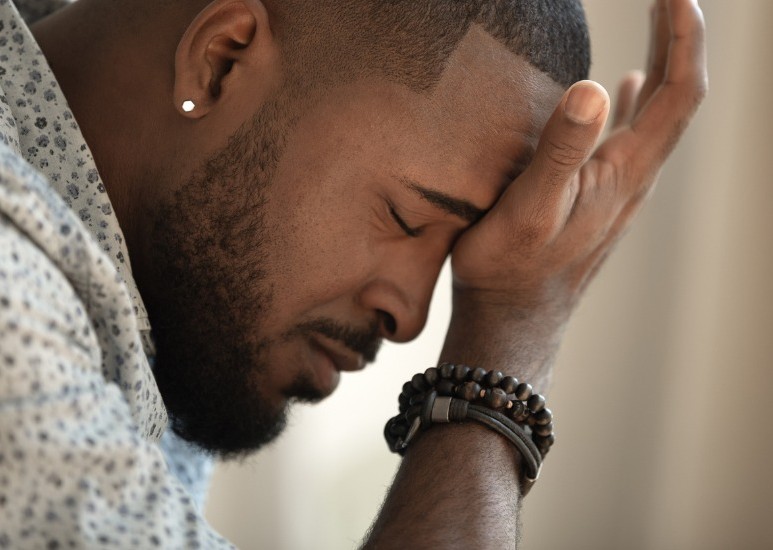
If you’ve arrived at this page, you’ve probably moved past the question of whether something is wrong. You know something is wrong. What you want to understand is what depression in men is actually doing to you, to your body, your relationships, your work, your brain and what that means for what comes next.
That’s what this piece covers.
Depression in men is not the same experience as depression in women. The biology overlaps, but the way it manifests — and the way it damages — follows patterns that are specific to men. Understanding those patterns is how you start to make sense of what’s been happening.
What Makes Depression Different in Men
Depression is shaped by biology, socialization, and the ways people learn to process — or not process — emotional pain. Men and women share the neurobiological substrate of depression, but the expression diverges in predictable ways.
Women with depression are more likely to internalize — to turn the pain inward through sadness, crying, visible distress, self-criticism. Men are more likely to externalize — to act out through anger, risk-taking, substance use, withdrawal, and overwork. This isn’t a universal rule, but it’s a consistent enough pattern that it shapes how depression damages men’s lives, and how it gets missed.
The externalization makes depression harder to recognize in men — both by the men themselves and by the people around them. It also means the damage often shows up first in relationships, work performance, and physical health rather than in visible emotional distress.
How Depression Affects Men’s Physical Health
Cardiovascular Health
The connection between depression and heart disease is well-established and significantly underappreciated. Chronic depression elevates cortisol and adrenaline, promotes inflammation, and disrupts the regulation of heart rate and blood pressure. Men with untreated depression have measurably higher rates of hypertension and are at significantly elevated risk for heart attack and stroke.
This is not a distant or theoretical risk. Depression-related cardiovascular damage accumulates over time, and men who have been depressed for years without treatment carry a real cardiac burden from it. Treating depression is, among other things, a cardiovascular health intervention.
Immune Function
Depression suppresses immune function. Chronically elevated stress hormones — particularly cortisol — reduce the effectiveness of the immune response. Men with untreated depression get sick more frequently, recover more slowly, and have higher rates of inflammatory conditions.
The immune suppression is also relevant to healing generally. Depression slows recovery from physical illness and injury, lengthens hospital stays, and worsens outcomes for men being treated for other medical conditions.
Chronic Pain
Depression and pain share neural pathways in the brain. Depression amplifies the brain’s sensitivity to pain signals — a process called central sensitization — which means that chronic pain without a clear structural cause is a recognized symptom of depression, not a separate problem.
Persistent headaches. Back pain that doesn’t respond to physical treatment. Gut pain. Generalized aching. These are real physical experiences, and they’re genuinely worsened by depression. They also typically improve with effective depression treatment — which is one of the clearest signals that depression was driving them.
Sleep
Depression disrupts sleep architecture in ways that go beyond difficulty falling asleep. It affects the proportion of time spent in restorative deep sleep, increases early morning waking, and produces a non-restorative quality even when sleep duration appears adequate.
The relationship is bidirectional and self-reinforcing: depression disrupts sleep, and sleep disruption worsens depression. Men in this cycle often feel exhausted regardless of how many hours they’ve slept — and that fatigue compounds every other symptom.
How Depression Affects Men’s Relationships
Relationships are where depression’s damage is often most visible — and most painful for the people on both sides.
The primary relational symptom of depression in men is emotional withdrawal. Not dramatic conflict, but a gradual disappearance — being present in the room but not really there, going through the motions of connection without the genuine availability that makes connection meaningful. Partners experience this as rejection, indifference, or a fundamental change in who you are. The distance feels personal to them even when it isn’t.
Irritability creates its own damage. The short fuse that depression produces turns ordinary domestic friction into recurring conflict. Small disagreements escalate. The emotional safety of the relationship erodes. Partners start managing around your moods in ways that create their own distance.
Loss of sex drive — a consistent and underreported symptom of male depression — affects intimacy and adds another layer of disconnection. Partners often interpret it as loss of attraction or interest, which it isn’t. Depression is the cause, but the relational wound is real regardless.
Men with depression often withdraw further when conflict occurs — which is the opposite of what relationships need. The isolation deepens. The relationship deteriorates. And the deterioration worsens the depression that’s driving it.
How Depression Affects Men at Work
Depression has a significant and measurable impact on work performance — one that’s easy to attribute to external factors rather than to the condition causing it.
Concentration becomes difficult. Tasks that previously felt manageable require disproportionate effort. Memory is less reliable. Decision-making slows — what used to be a quick call now involves excessive deliberation or avoidance. The quality of work declines in ways that may be visible to colleagues and managers before the man himself fully registers them.
Motivation disappears. Work that used to feel meaningful becomes mechanical. The sense of purpose that made effort worthwhile is gone. Getting through the day becomes the goal rather than doing anything well within it.
Some men respond by overworking — staying late, taking on more, using busyness as both an escape from depression and a way to compensate for declining performance. This is unsustainable. The overwork accelerates the exhaustion that depression is already producing, and the performance gap tends to widen anyway.
The economic consequences of untreated depression, missed promotions, strained professional relationships, job loss — are real and compound over time.
How Depression Affects Men’s Mental and Emotional Life
The internal experience of depression in men is often characterized more by numbness than by sadness. A flatness. An absence of the feelings, pleasure, enthusiasm, anticipation, connection that used to make daily life worth engaging with.
Negative self-talk operates in the background: a quiet, persistent current of self-criticism, self-doubt, and a sense of inadequacy that colors how every experience is interpreted. Failures feel confirming. Successes feel hollow or undeserved.
Hopelessness — a sense that things won’t meaningfully improve becomes a lens through which future possibilities are evaluated. It’s not dramatic despair. It’s a dulled expectation that tends to foreclose effort and make the depression self-fulfilling.
Substance use as self-medication adds another layer. Alcohol provides temporary relief from the numbness and the internal noise. Over time it worsens both. Men in this pattern are managing a depression that’s being actively maintained and deepened by the thing they’re using to cope with it.
Men with untreated depression are three to four times more likely to die by suicide than women. This is not a statistic about weakness — it’s a clinical reality that makes recognizing and treating depression in men an urgent priority. If you’re having thoughts of suicide, the 988 Suicide and Crisis Lifeline is available 24/7 — call or text 988.
What’s Happening in the Brain
Depression involves measurable changes in brain structure and function. It is biological, not a character flaw, not a failure of effort or attitude, not something that can be resolved by deciding to feel differently.
Neurotransmitter systems are affected particularly serotonin, dopamine, and norepinephrine, which regulate mood, motivation, pleasure, and energy. Depression also involves changes in the prefrontal cortex (responsible for decision-making, emotional regulation, and executive function) and the hippocampus (involved in memory and stress response). Chronic stress hormones associated with depression can actually reduce hippocampal volume over time.
Understanding this matters because it reframes the experience. The difficulty concentrating, the loss of motivation, the inability to feel pleasure, these are not personal failures. They are the predictable outputs of a brain in a depressive state. And they respond to treatment.
How Long Does Depression Last Without Treatment?
An untreated major depressive episode typically lasts between six and thirteen months. With effective treatment, that duration shortens considerably often to weeks rather than months.
Depression also tends to recur. A first episode increases the risk of a second. A second increases the risk of a third. Each recurrence is more likely to be triggered by less significant stressors than the one before. Early intervention doesn’t just shorten the current episode — it reduces the likelihood and severity of future ones.
Waiting for depression to resolve on its own is not a neutral choice. It’s a choice to carry the cognitive, relational, physical, and career costs of the condition for longer than necessary.
What Treatment Looks Like
Graywood Wellness works exclusively with men. Our programs in Orange County are built around the evidence-based treatments that work for male depression, in a men’s-only environment that removes one of the most common barriers men report to engaging with mental health care.
Cognitive Behavioral Therapy (CBT) directly addresses the thought patterns — the negative self-talk, the hopelessness, the cognitive distortions — that sustain depression. EMDR therapy is used for depression that is rooted in trauma. Group therapy rebuilds the peer connection that depression systematically erodes. Medication management is available for men for whom pharmacological support is appropriate as part of a broader plan.
Our Partial Hospitalization Program (PHP) provides structured daily treatment for men whose depression is significantly affecting their ability to function. Our Intensive Outpatient Program (IOP) provides consistent, frequent support for men maintaining work and home responsibilities.
For a full picture of how depression is treated at Graywood Wellness and how to find the right level of care, see our guide to depression in men.
Frequently Asked Questions
How does depression affect men differently than women?
Men with depression are more likely to externalize — expressing the condition through anger, irritability, risk-taking, substance use, and withdrawal rather than visible sadness. The neurobiological experience of depression is similar across genders, but the behavioral expression and the damage it produces follow different patterns. Men are also significantly less likely to seek help, and significantly more likely to die by suicide from untreated depression.
Can depression cause physical pain?
Yes. Depression and pain share neural pathways. Depression amplifies the brain’s sensitivity to pain signals — a process called central sensitization — producing chronic pain without a clear structural cause. Headaches, back pain, gut pain, and generalized aching are recognized symptoms of depression. These physical symptoms typically improve with effective depression treatment.
How does depression affect relationships?
Depression affects relationships primarily through emotional withdrawal, irritability, and loss of sex drive. Partners experience withdrawal as rejection or indifference. Irritability creates recurring conflict. Loss of libido adds disconnection. Men with depression tend to isolate further when conflict occurs, which deepens the depression and accelerates relationship deterioration.
How long does depression last without treatment?
An untreated major depressive episode typically lasts six to thirteen months. Depression also tends to recur — with each episode increasing the likelihood and potentially the severity of the next. Effective treatment significantly shortens the duration of a depressive episode and reduces recurrence risk.
What is the best treatment for male depression?
Effective treatment for male depression typically combines therapy — particularly Cognitive Behavioral Therapy (CBT) — with structured support and, where appropriate, medication. EMDR is effective for depression rooted in trauma. Men’s-only programming removes a significant barrier many men report to engaging with mental health treatment. The right level of care — outpatient, IOP, or PHP — depends on the severity of symptoms and the impact on daily functioning.